
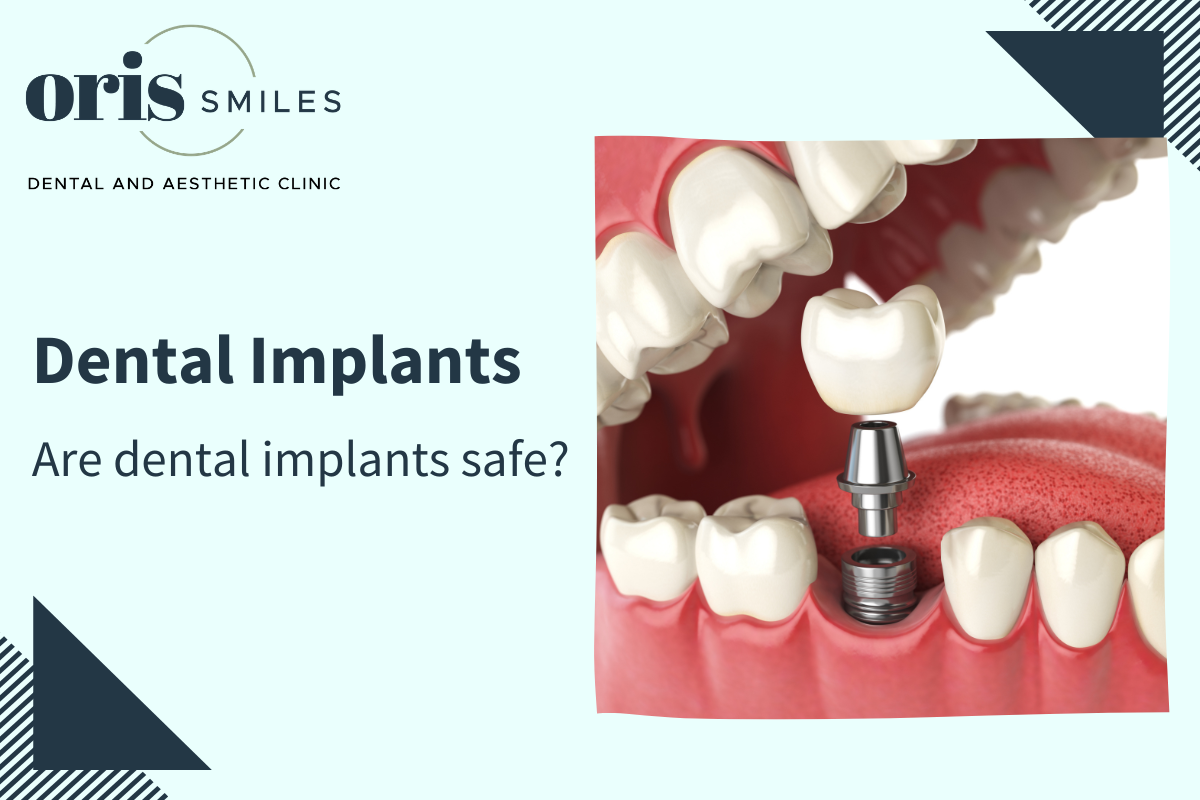
Are Dental Implants Safe? Complete Evidence-Based Safety Guide & Risk Analysis
Dental implants are FDA-approved and considered safe for properly screened candidates with ninety-three percent surviving twenty-plus years. Safety depends on overall health status, oral hygiene habits, bone quality, and surgeon expertise, making individual candidacy assessment essential. Understanding realistic risks versus benefits helps you make informed decisions about tooth replacement. Millions of successful implants are placed annually in the United States, with clinical research consistently demonstrating predictable outcomes. Call 063536 90788 to assess your implant candidacy safely with Dr. Janu Shah at Oris Smiles Dental Clinic.
FDA Approval and Safety Standards for Dental Implants
Are dental implants safe? FDA regulatory oversight confirms that dental implants are classified as medical devices requiring rigorous safety approval before market availability. Manufacturers must prove new systems are as safe and effective as existing approved systems through biocompatibility testing against International Organization for Standardization standards. Most implants are made of titanium Grade IV or Grade V, highly biocompatible materials with well-established fifty-plus year safety profiles. Materials undergo cytotoxicity, sensitization, and systemic toxicity testing before human use. Titanium allergies are extremely rare, documented in less than 0.6 percent of populations. FDA requires continuous adverse event reporting through the MedWatch system, ensuring ongoing safety monitoring after approval.
Surgical Risks and Complications
Are dental implants safe during surgery? Immediate post-operative risks are manageable with proper technique. Minor bleeding, peak swelling on days two to three resolving within one week, and mild pain manageable with over-the-counter ibuprofen are expected. Infections are preventable with prophylactic antibiotics and sterile surgical technique, with rates below two percent when proper protocols are followed. Temporary numbness or tingling occasionally occurs, resolving within weeks; permanent nerve damage is extremely rare at less than one percent with proper 3D surgical planning.
Anatomical injury risks during surgery include inferior alveolar nerve damage affecting lower lip sensation, with permanent damage rates below one percent using guided implant placement. Maxillary sinus perforation during upper posterior implant placement is manageable when recognized immediately, rarely causing chronic problems. Adjacent tooth damage is prevented by accurate diagnosis and experienced surgical technique, occurring in less than one percent of cases with modern guidance systems.
Implant integration failures occur in one to five percent of cases, where implants never achieve bone fusion. Causes include inadequate bone support, poor initial stability, or surgical trauma. Failed implants are removed cleanly, and new implants succeed in eighty-five to ninety percent of cases after three-month healing.
Risk Factors That Increase Implant Failure
Are dental implants safe for everyone? Specific conditions elevate failure risk significantly. Smoking increases failure rates to eleven percent versus five percent for non-smokers, making cessation essential before surgery. Uncontrolled diabetes with HbA1c above 8.0 is a contraindication for elective implants, while controlled diabetes below 7.0 achieves near-normal success rates above ninety percent. Active periodontitis must be treated four to six weeks before implant placement. Immunocompromised patients, those with severe bone loss, advanced age combined with poor health, osteoporosis, and autoimmune diseases require careful evaluation. Medications like corticosteroids, anticoagulants, and bisphosphonates require medical optimization or temporary adjustment perioperatively.
Long-Term Success Rates and Safety Data
Are dental implants safe long-term? Clinical evidence strongly supports implant safety. Ten-year survival rates reach ninety-five to ninety-eight percent for properly placed implants in healthy patients. Twenty-year studies show ninety-three percent implant survival, with bone support remaining stable after the first year. Success varies by patient risk group: non-smokers with no diabetes achieve two to three percent failure rates, while smokers reach eleven percent and heavy smokers fifteen to twenty percent. Age alone does not predict outcomes; patients over seventy-five achieve eighty-five to ninety percent success rates when general health is good.
Peri-implantitis, inflammatory disease affecting supporting tissues, develops in ten to fifteen percent of implant patients and is preventable through excellent oral hygiene. Early detection through regular monitoring allows treatment preventing implant loss.
Protecting Implant Safety Long-Term
Are dental implants safe with proper maintenance? Long-term safety depends entirely on patient compliance. Brush twice daily with soft-bristled brush, floss daily with expandable implant tape, and maintain professional cleanings every six months. Avoid hard foods, stop smoking, control diabetes, and manage stress to reduce grinding. Attend six-month recall visits for clinical assessment and annual radiographs monitoring bone levels. Early warning signs including loose implants, bleeding gums, or pus drainage require immediate dental contact.
Frequently Asked Questions About Dental Implant Safety
Are dental implants safer than natural teeth?
Implants cannot decay like natural teeth but require excellent oral hygiene for bone support. Implant failure rates of one to five percent are comparable to natural tooth loss rates over twenty years.
What is the safest implant material?
Titanium Grade IV and V with fifty-plus years of clinical data is most researched. Zirconia ceramic implants offer excellent biocompatibility with growing evidence but shorter track record. Titanium allergy is extremely rare.
Is implant surgery itself dangerous?
Implant surgery is safe when performed by trained surgeons with proper anesthesia. Serious complications are rare: nerve damage below one percent, sinus perforation below one percent, severe infection below two percent.
How do I know if I’m a good candidate?
Good candidates have good overall health, adequate bone, healthy gums, non-smoker status, and good oral hygiene. Not ideal: uncontrolled diabetes, heavy smoking, active gum disease, severe bone loss, or compromised immunity.
What happens if my implant fails?
Failed implants are removed cleanly, allowing three-month healing before replacement. New implants succeed eighty-five to ninety percent of the time with proper technique.
Ready to assess your implant safety? Schedule your comprehensive consultation with Dr. Janu Shah at Oris Smiles Dental Clinic. Call 063536 90788 or visit https://www.orissmiles.com/. Located at 103, Shreeya Atlanta, Sindhubhavan Road, Thaltej, Ahmedabad 380059. Hours: Monday to Saturday, 10 am to 7 pm.
