
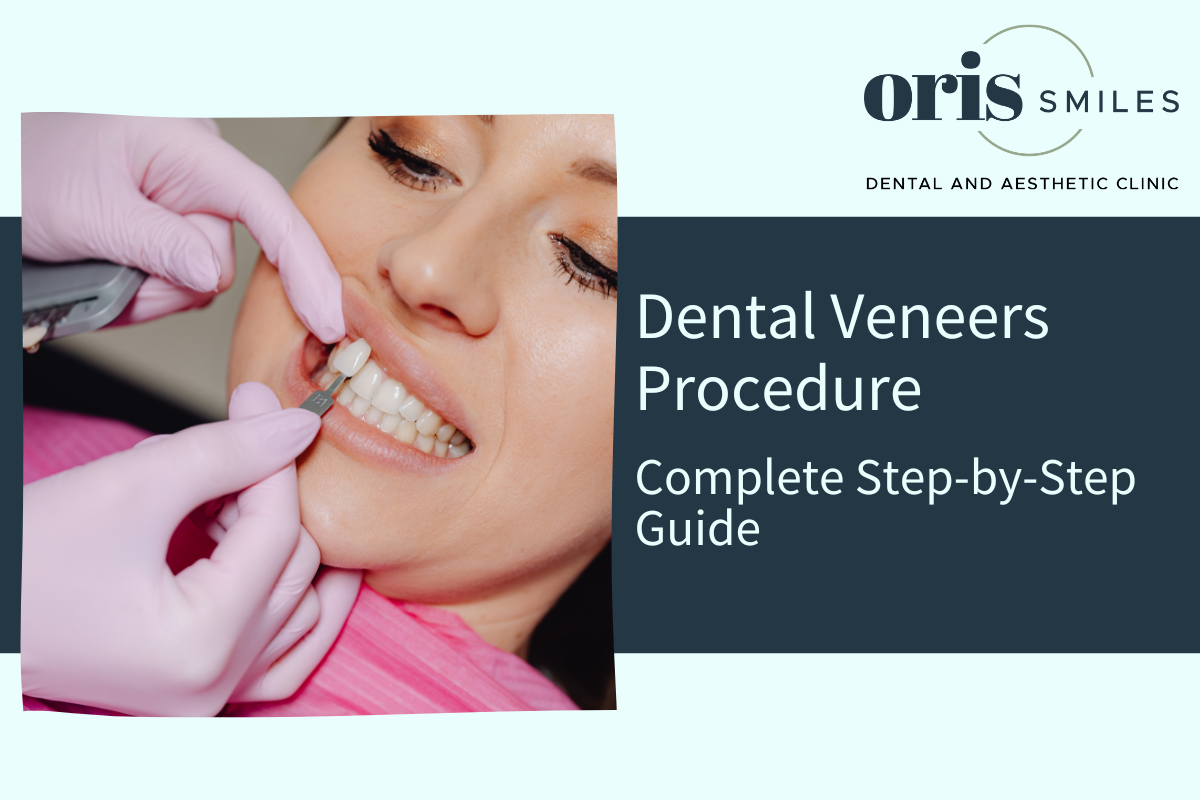
Dental Veneers Procedure: Complete Step-by-Step Guide to Smile Transformation
Dental veneers procedure transforms smile aesthetics with custom-designed tooth-colored shells covering visible tooth surfaces. Veneers conceal stains, chips, gaps, misalignment, and discoloration through minimally invasive restoration. Procedure ranges from single-visit composite veneers to two-appointment porcelain veneer placements. Understanding the complete process empowers informed decision-making about cosmetic smile enhancement. Dr. Janu Shah specializes in digital smile design and custom veneer fabrication using advanced esthetic techniques. Veneers offer dramatic aesthetic improvements with durable results lasting ten to fifteen years when properly maintained. Call 063536 90788 to transform your smile with expert veneer consultation at Oris Smiles Dental Clinic.
Understanding Dental Veneers and Procedure Options
Dental veneers procedure uses custom-made tooth-colored shells covering front tooth surfaces only. Veneers are thin restorations (0.5 to 0.7 millimeters thickness) mimicking natural tooth structure, bonded permanently to natural teeth using advanced adhesive systems. Veneers cover cosmetic defects but provide no structural reinforcement like crowns.
Porcelain veneers are fabricated in laboratory using dental porcelain ceramic material with high translucency and superior stain resistance. Procedure requires moderate enamel removal (0.5 to 0.7 millimeters) and two appointments spanning one to two weeks. Lifespan reaches ten to fifteen years with excellent oral hygiene. Cost ranges higher reflecting laboratory work and superior materials.
Composite veneers are applied directly chairside using tooth-colored resin material built up layer-by-layer in single appointment. Minimal enamel removal required makes procedure more conservative. Lifespan spans five to seven years. Cost significantly less than porcelain. Composite is more reversible if patient changes mind but less durable long-term.
Dental Veneers Procedure: Consultation and Preparation
Dental veneers procedure begins with comprehensive consultation including intraoral examination, shade matching, occlusal analysis, and periodontal evaluation. Dr. Janu Shah assesses enamel thickness, existing restorations, decay risk, gum health, and bone support. Digital smile design software creates 3D simulation of proposed veneer design showing tooth position, color, and shape before commitment.
Radiographic imaging confirms tooth integrity and bone levels. Shade selection occurs under natural daylight using standardized shade guides ensuring accurate color match. Digital photography documents current smile for before-and-after comparison. Discussion covers veneer type (porcelain versus composite), irreversibility of enamel removal, cost breakdown, timeline, maintenance requirements, and insurance coverage typically excluding cosmetic procedures.
For porcelain veneers, tooth preparation appointment removes 0.5 to 0.7 millimeters enamel from visible surfaces only. Dr. Janu Shah uses selective-area preparation with high-speed handpiece and diamond burs, applying water cooling preventing heat generation. Margins are placed supragingival (above gum line) for visibility and accessibility. Proximal and cervical margins blend seamlessly with natural tooth.
Impressions are taken using polyvinyl siloxane material or digital scanning capturing prepared tooth surface, adjacent teeth, and gum architecture. Detailed shade documentation includes hue, chroma, value, translucency areas, and natural characterization. Photographs accompany case sent to laboratory. Temporary veneers fabricated from acrylic or composite material protect tooth during one to two week laboratory fabrication period.
Porcelain Veneers Procedure: Final Placement
Dental veneers procedure completes with final veneer arrival and placement appointment. Laboratory-fabricated veneer is examined for defects and proper color match. Try-in assessment without bonding verifies shade, fit, and shape in natural light. Patient approves color and esthetics before permanent bonding.
Tooth surface preparation includes cleaning all temporary adhesive residue and applying 37 percent phosphoric acid etching for fifteen to thirty seconds creating microscopic mechanical lock. Thorough rinsing and complete drying follow. Bonding resin primer is applied to etched enamel surface. Silane coupling agent is applied to veneer internal surface chemically bonding veneer ceramic to resin adhesive.
Dual-cure resin cement is applied to veneer internal surface and carefully seated onto prepared tooth with gentle pressure. Excess adhesive is removed with soft brush and floss immediately. Blue light curing polymerizes adhesive for forty to sixty seconds from multiple angles ensuring complete hardening. Margins are finished and polished creating seamless veneer-tooth transition. Bite is checked ensuring even contact without premature contacts creating discomfort.
Composite Veneers Procedure: Direct Method
Dental veneers procedure using composite offers single-appointment alternative. Minimal enamel removal or no-prep approach preserves maximum natural tooth structure. Shade matching occurs under natural daylight. No impressions needed eliminating laboratory waiting period.
Tooth surface undergoes minimal preparation with selective enamel removal only in defect areas. Acid etching creates micro-retentive surface. Bonding agent priming follows. Composite resin is applied layer-by-layer with light curing between layers. Dentist sculpts each layer customizing color variations and characterization. Final shaping creates natural incisal edge definition and facial contours. Surface polishing achieves natural gloss matching surrounding teeth.
Post-Operative Care and Long-Term Maintenance
Dental veneers procedure requires careful post-operative management. Soft diet for first twenty-four hours allows adhesive full cure. Avoid hard, sticky, and very hot foods initially. Gentle brushing with soft-bristled brush and careful flossing begin after twenty-four to forty-eight hours.
Daily oral hygiene includes twice-daily brushing with non-abrasive toothpaste, daily flossing with gentle technique, and optional antimicrobial mouthwash. Avoid staining beverages like red wine, coffee, and tea. Eliminate hard foods, sticky candies, and direct apple biting. Wear night guard if grinding prevents excessive bite forces damaging veneers. Professional cleanings every six months with annual radiographs monitor veneer and tooth health.
Expected veneer lifespan reaches ten to fifteen years for porcelain with excellent care. Composite typically lasts five to seven years. Multiple replacement cycles reduce remaining tooth structure potentially requiring eventual crown restoration.
Frequently Asked Questions About Dental Veneers Procedure
What is the difference between porcelain and composite veneers?
Porcelain veneers require two appointments, last ten to fifteen years, require enamel removal, and cost more. Composite veneers are single-appointment, last five to seven years, require minimal enamel removal, and cost less. Porcelain is more durable and stain-resistant; composite is more reversible and affordable.
Does the veneer procedure hurt?
Veneer preparation typically requires no anesthesia because enamel removal is not sensitive. Local anesthesia may be recommended if veneers extend below gum line. Most patients report the procedure pain-free with no post-operative pain beyond mild sensitivity lasting days.
Are veneers permanent?
Porcelain veneers are permanent and irreversible because enamel removal cannot be reversed. Composite veneers are more reversible with minimal enamel removed. Most veneers last ten to fifteen years requiring eventual replacement.
Can I eat normally with veneers?
Yes, after initial healing period, normal eating is possible. Hard and sticky foods should be avoided or modified by cutting into pieces and chewing with back teeth. Most patients adapt quickly resuming normal diet within days.
How do I care for veneers long-term?
Brush twice daily with soft-bristled brush and non-abrasive toothpaste, floss daily with gentle technique, avoid staining beverages, eliminate hard and sticky foods, prevent smoking, use night guard if grinding, and attend professional cleanings every six months.
Ready to transform your smile with expert dental veneers procedure? Schedule your digital smile design consultation with Dr. Janu Shah at Oris Smiles Dental Clinic. Call 063536 90788 or visit https://www.orissmiles.com/. Located at 103, Shreeya Atlanta, Sindhubhavan Road, Thaltej, Ahmedabad 380059. Hours: Monday to Saturday, 10 am to 7 pm.
