
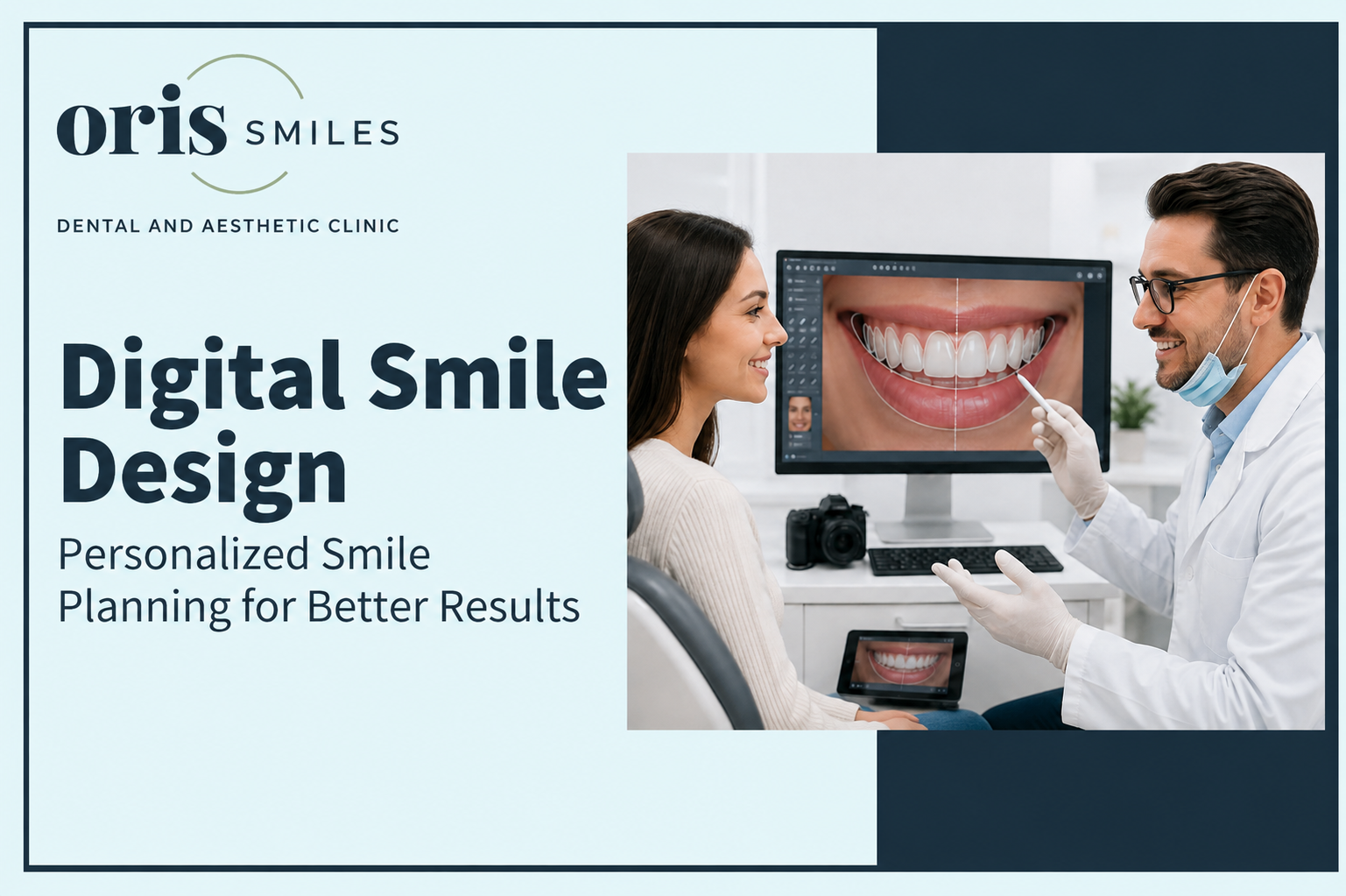
How Digital Smile Design Is Transforming Cosmetic Dentistry
A smile is more than the appearance of your teeth. Tooth shape, colour, alignment, gum display, and the way your smile fits your facial features can all influence how your smile looks. For people who want to improve these aspects, modern cosmetic dentistry offers more personalized ways to plan treatment.
Digital Smile Design (DSD) is one approach that brings digital technology into smile planning. Instead of relying only on conventional examination and physical models, dentists can use photographs, digital measurements, and other records to evaluate the relationship between the teeth, gums, lips, and face before deciding on suitable cosmetic treatments.
For patients considering a smile makeover, this can make the treatment-planning process more visual and easier to understand. Research has also found that DSD can support communication between dentists and patients and may improve treatment planning and patient satisfaction.
What Is Digital Smile Design?
Digital Smile Design is a technology-assisted approach to analysing and planning smile aesthetics. It allows a dentist to study features such as tooth proportions, tooth position, gum display, facial characteristics, and overall smile harmony before selecting appropriate treatment.
The goal is not simply to create whiter or straighter-looking teeth. A well-planned smile should also consider the patient’s facial features, oral health, functional requirements, and individual preferences.
At Oris Smiles Dental Clinic, smile designing focuses on creating a personalized treatment plan and replicating natural tooth shape and form as part of the smile-designing process.
How Is Digital Smile Design Changing Cosmetic Dentistry?
Traditional cosmetic dentistry has always involved careful clinical examination and treatment planning. Digital technology adds another layer of visual analysis and communication.
Here are some of the ways Digital Smile Design is influencing modern cosmetic dentistry.
1. More Personalized Smile Planning
Every smile is different. The ideal tooth shape or proportion for one person may not suit another.
Digital smile planning allows the dentist to assess the patient’s individual facial and dental characteristics rather than approaching every smile makeover in exactly the same way.
Factors that may be considered include:
- Tooth shape and proportions
- Tooth alignment
- Smile line
- Gum visibility
- Tooth colour
- Facial symmetry
- Existing dental conditions
- Patient expectations
This helps create a treatment plan that is tailored to the individual rather than based on a standard template.
2. Better Communication Between Dentist and Patient
One of the challenges in cosmetic dentistry is communicating what the final treatment may aim to achieve.
Digital records and visual treatment planning can make discussions easier. Instead of describing a proposed change only in words, the dentist can use digital information and visual references to explain the planned approach.
A systematic review published in 2024 reported that DSD can improve dentist-patient communication and may contribute to patient satisfaction. However, DSD remains a planning and communication tool rather than a guarantee of a particular final result.
3. Better Analysis of Smile Aesthetics
A smile is influenced by more than individual teeth.
Digital smile analysis can help clinicians evaluate the relationship between:
- Teeth
- Gums
- Lips
- Facial features
- Tooth proportions
- Smile symmetry
This broader analysis is important because changing one element of the smile can affect how the overall smile appears.
Research on digital smile design has examined different software systems and their ability to assess dental, gingival, and facial aesthetic parameters.
4. Helps Coordinate Different Cosmetic Treatments
A smile makeover may involve one treatment or a combination of treatments, depending on the patient’s needs.
At Oris Smiles, the smile-designing page describes several procedures that may be used as part of a smile makeover, including:
- Laminates for certain cosmetic imperfections
- Ceramic crowns for weakened teeth when clinically indicated
- Teeth whitening for tooth discolouration
- Enamel recontouring for minor shape irregularities
- Minor orthodontics for selected alignment or spacing concerns
- Gum depigmentation
- Gum recontouring
The appropriate combination depends on the condition of the teeth and gums, oral health, aesthetic goals, and clinical assessment.
What Problems Can Digital Smile Design Help Plan For?
Digital smile planning may be considered when a patient is concerned about several aesthetic issues.
Common concerns include:
| Smile concern | Possible treatment approach |
| Tooth discolouration | Teeth whitening or restorative treatment |
| Chipped teeth | Laminates, bonding, or other restorative options |
| Irregular tooth shape | Enamel recontouring or restorative treatment |
| Small gaps | Minor orthodontics or selected restorative options |
| Crooked teeth | Orthodontic treatment where appropriate |
| Gummy smile | Evaluation of gum and smile-line concerns |
| Missing teeth | Restorative options such as dental implants |
| Worn or weakened teeth | Crowns or other restorative treatments when indicated |
These treatments are not automatically suitable for everyone. A dentist needs to evaluate the underlying oral condition before recommending a cosmetic procedure.
What Is the Digital Smile Design Process?
The exact workflow varies depending on the dental practice and treatment required. A typical smile-designing process may include several stages.
Step 1: Dental Examination
The first step is a detailed dental examination. This helps identify existing dental problems and determine whether cosmetic treatment is appropriate.
Oris Smiles’ smile makeover process begins with dental and radiographic examination to support treatment planning.
Step 2: Photographs and Dental Records
Photographs, impressions, and other dental records can be collected to analyse the patient’s smile.
These records provide information about tooth shape, alignment, gums, and the overall appearance of the smile.
Step 3: Digital Smile Analysis and Treatment Planning
The dentist evaluates the collected information and develops a treatment plan based on the patient’s dental condition and aesthetic objectives.
The purpose is to determine which procedures, if any, are appropriate and how they can work together.
Step 4: Cosmetic Dental Treatment
Once the plan is finalized, the selected treatment can begin. Depending on the patient’s needs, this may involve whitening, laminates, orthodontic treatment, gum procedures, crowns, or other restorative procedures.
Step 5: Follow-Up
Follow-up appointments allow the dental team to monitor healing, function, aesthetics, and the condition of the completed treatment.
Is Digital Smile Design Suitable for Everyone?
No. Digital Smile Design is not automatically suitable for every patient or every cosmetic dental concern.
A comprehensive dental examination should come first. Problems such as tooth decay, gum disease, infection, significant tooth damage, or other oral-health concerns may need attention before cosmetic treatment is considered.
It is also important to understand that digital planning does not replace the dentist’s clinical judgement. Digital tools support diagnosis, communication, and treatment planning, but the final treatment must be based on the patient’s clinical condition.
Digital Smile Design vs. Traditional Smile Planning
Digital Smile Design does not necessarily replace conventional dentistry. Instead, it can complement established examination and planning methods.
| Traditional planning | Digital smile planning |
| Relies heavily on clinical examination and physical records | Combines clinical records with digital analysis |
| Communication may rely more on verbal explanations and physical models | Can provide additional visual communication |
| Smile analysis can be performed using conventional methods | Digital tools can assist with aesthetic analysis |
| Treatment planning remains clinician-led | Treatment planning remains clinician-led, with digital support |
The most appropriate approach depends on the patient’s needs, available technology, and the dentist’s clinical assessment.
Why Patient Involvement Matters in Smile Design
Cosmetic dentistry is not only about what the dentist considers aesthetically pleasing. The patient’s expectations and preferences are also important.
During consultation, patients should discuss:
- What they like or dislike about their current smile
- Whether they want changes in tooth colour
- Concerns about tooth shape or alignment
- How much treatment they are comfortable with
- Their expectations about the final appearance
- Their oral-health priorities
Good communication helps the dentist understand the patient’s goals and explain which expectations are realistic.
How Oris Smiles Approaches Smile Designing
At Oris Smiles Dental Clinic, smile designing is presented as a personalized cosmetic dental process rather than a single procedure. The clinic’s approach includes assessment, photographs and impressions, treatment planning, selected cosmetic or restorative procedures, and follow-up care.
The clinic is located in Thaltej, Ahmedabad, and its smile makeover services are led by Dr. Janu Shah.
If you are considering a smile makeover, the first step should be a professional dental evaluation to understand which treatment options are suitable for your teeth, gums, and overall oral health.
Frequently Asked Questions About Digital Smile Design
1. What is Digital Smile Design?
Digital Smile Design is a technology-assisted approach to analysing and planning smile aesthetics. It can help dentists evaluate teeth, gums, facial features, and smile proportions before selecting suitable treatment options.
2. Is Digital Smile Design the same as a smile makeover?
Not exactly. Digital Smile Design is primarily a planning and communication approach, while a smile makeover refers to the cosmetic dental treatments used to improve the appearance of a smile.
3. What treatments can be included in a smile makeover?
Depending on the patient’s needs, treatment may include teeth whitening, laminates, crowns, enamel recontouring, orthodontic treatment, gum procedures, or other restorative options.
4. Can Digital Smile Design fix crooked teeth?
Digital planning can help assess tooth alignment and determine an appropriate treatment approach. Depending on the severity, orthodontic treatment or another suitable option may be recommended.
5. Is Digital Smile Design suitable for patients with missing teeth?
It can be used as part of the planning process for patients with missing teeth, but the appropriate restorative solution depends on the patient’s oral health and clinical condition. Options may include dental implants or other restorations.
6. Does Digital Smile Design guarantee the final result?
No. Digital planning can improve communication and treatment planning, but it cannot guarantee an identical final result. Biological factors, treatment limitations, materials, and healing can affect the outcome.
7. How do I know whether I need a smile makeover?
A dental consultation is the best way to determine whether cosmetic treatment is appropriate. Your dentist can assess your teeth and gums, understand your goals, and explain suitable treatment options.
Transform Your Smile with a Personalized Plan
A beautiful smile should look natural, complement your facial features, and fit your individual needs. Digital Smile Design brings technology into the planning process to make smile analysis and treatment discussions more visual and personalized.
If you are considering cosmetic dental treatment in Ahmedabad, consult Oris Smiles Dental Clinic for an assessment of your smile and a treatment plan based on your dental needs.
Want to explore your smile makeover options? Book a consultation with Oris Smiles Dental Clinic and discuss your smile goals with a dental professional.
